The Dawn of the Intelligent Farm
The agricultural sector stands at the precipice of a revolution, driven not by new machinery or chemical breakthroughs, but by data and artificial intelligence. For decades, livestock farming, particularly pig farming, has relied on traditional methods, expert intuition, and manual labor. While effective, these methods are inherently limited in scale, precision, and responsiveness. The global demand for sustainable, high-quality protein, coupled with increasing pressure on resource efficiency and animal welfare, has created an urgent need for a smarter approach.
Enter Trackfarm, a pioneering solution that is transforming the hog industry from a labor-intensive operation into a data-driven, precision-managed ecosystem. Trackfarm is not just another piece of farm equipment; it is a comprehensive AI platform designed to provide real-time, actionable insights into every aspect of a pig’s life, from birth to market. By moving beyond the theoretical “hype” of AI, Trackfarm is delivering practical, measurable results that are redefining profitability and sustainability in livestock management.
The promise of AI in agriculture has long been a topic of discussion, but the reality of deployment has often lagged. Trackfarm bridges this gap by focusing on the most critical, high-impact areas of pig farming: health, nutrition, and reproduction. This article explores the tangible ways AI is being applied today, proving that the future of farming is already here.

The Unseen Crisis: Challenges in Traditional Farming
Modern pig farming faces a trifecta of challenges: disease management, feed efficiency, and labor scarcity.
Disease Management: In a large-scale operation, a single sick animal can quickly compromise an entire herd. Traditional monitoring relies on human observation, which is subjective, time-consuming, and often too late. By the time a farmer notices a subtle change in behavior or appetite, the disease may have already spread, leading to costly veterinary interventions, medication use, and, worst of all, mortality. The economic impact of endemic diseases like Porcine Reproductive and Respiratory Syndrome (PRRS) or African Swine Fever (ASF) is staggering, and early detection is the only viable defense.
Feed Efficiency: Feed constitutes the largest operational cost in pig farming, often accounting for 60-70% of total expenses. Optimizing the Feed Conversion Ratio (FCR)—the amount of feed required to gain one unit of weight—is paramount to profitability. However, pigs are individuals; their nutritional needs vary based on age, weight, genetics, and environmental stress. A one-size-fits-all feeding strategy is inherently wasteful and inefficient.
Labor Scarcity: The farming industry globally struggles to attract and retain skilled labor. The work is physically demanding, repetitive, and requires constant vigilance. This shortage puts immense pressure on farm owners and managers, who are forced to stretch their resources thin, often sacrificing the precision and attention to detail that high-yield farming requires.
Trackfarm’s AI solutions are specifically engineered to address these fundamental pain points, offering a level of precision and automation that human labor simply cannot match.
Trackfarm’s Core Technology: The AI Engine at Work
The heart of the Trackfarm solution is a sophisticated AI engine that processes a continuous stream of multimodal data collected from the farm environment. This engine utilizes three primary branches of artificial intelligence: computer vision, acoustic analysis, and predictive modeling.
Computer Vision: The Unblinking Eye
High-resolution cameras are strategically placed throughout the barns, providing a 24/7 visual feed. Trackfarm’s computer vision algorithms analyze this video data to track individual animal behavior, movement patterns, and physical condition.
- Gait Analysis: Subtle changes in a pig’s gait can be an early indicator of lameness or joint issues, often days before a human observer would notice. The AI detects these micro-movements and flags the specific animal for inspection.
- Body Condition Scoring (BCS): The system automatically estimates the weight and body condition of pigs, providing a non-invasive, highly accurate alternative to manual weighing. This is crucial for grouping pigs, optimizing market timing, and adjusting feed rations.
- Lying and Standing Patterns: Deviations from normal resting and activity cycles can signal stress, discomfort, or the onset of illness. The AI establishes a baseline for each pen and alerts the farmer to statistically significant anomalies.
Acoustic Analysis: Listening to the Herd
The sounds of a pig barn are a rich source of diagnostic information. Trackfarm employs specialized microphones and deep learning models to analyze the acoustic environment.
- Cough and Sneeze Detection: Respiratory diseases are a major threat. The AI can isolate and count the frequency of coughs and sneezes, even in a noisy environment, providing an objective measure of respiratory health across the herd. An increase in these events is a powerful early warning sign of a potential outbreak.
- Aggression and Stress: High-pitched squeals and aggressive vocalizations can indicate fighting, bullying, or environmental stress (e.g., temperature fluctuations). By quantifying these sounds, the system helps managers identify and mitigate sources of stress, improving animal welfare and reducing injury.
Predictive Modeling: From Data to Decision
The data from vision and acoustic systems, combined with environmental sensor data (temperature, humidity, air quality), is fed into Trackfarm’s predictive models. These models use historical data and machine learning to forecast future outcomes.
- Outbreak Prediction: By correlating subtle behavioral changes, acoustic anomalies, and environmental factors, the AI can predict the probability of a disease outbreak in a specific pen or barn up to 72 hours in advance. This allows for targeted, prophylactic interventions, minimizing the need for mass medication.
- Optimal Market Timing: Based on growth rate predictions and FCR analysis, the system recommends the precise day an animal will reach its optimal market weight, maximizing carcass value and minimizing holding costs.
Practical Application 1: Precision Health and Disease Detection
The most immediate and profound impact of Trackfarm’s AI is in animal health. The system shifts the paradigm from reactive treatment to proactive prevention.
Individualized Health Monitoring
Every pig is treated as an individual data point. The AI creates a unique behavioral and physiological profile for each animal. When a pig deviates from its own established norm, the system generates an alert. This level of granularity is impossible with human observation alone.
For example, a pig might reduce its water intake by 15% over 12 hours, a change too small for a human to notice but highly significant to the AI. This early warning allows farm staff to isolate the animal, check for minor issues, and prevent a potential illness from escalating. This is the essence of precision livestock farming: the right intervention, for the right animal, at the right time.
Targeted Intervention and Reduced Antibiotic Use
The ability to pinpoint the exact location and identity of a sick animal dramatically reduces the need for blanket antibiotic treatments. Instead of medicating an entire pen or barn, the farmer can administer treatment only to the affected individual. This is a critical step toward reducing antibiotic resistance, a major global health concern, and aligns with consumer demand for more responsibly raised livestock.
Practical Application 2: Optimized Feeding and Growth
As the single largest cost driver, feed management offers the greatest opportunity for efficiency gains. Trackfarm’s AI transforms the feeding process from a scheduled routine into a dynamic, data-driven system.
Dynamic Ration Adjustment
The AI constantly monitors the actual consumption and growth rate of each group of pigs. If a group is underperforming relative to its feed intake, the system can automatically adjust the nutrient density or composition of the feed delivered to that pen. This ensures that every gram of feed is utilized for maximum growth, minimizing waste.
Maximizing Feed Conversion Ratio (FCR)
The FCR is the ultimate metric of feeding efficiency. Trackfarm provides a continuous, real-time FCR calculation, allowing managers to benchmark performance across different genetics, feed batches, and environmental conditions. This data is invaluable for strategic decision-making, such as selecting the most cost-effective feed supplier or identifying the optimal genetic lines for their operation.
The following table illustrates the potential FCR improvements and cost savings achieved through AI-driven precision feeding, based on industry averages and Trackfarm case studies:
| Metric | Traditional Farming (Manual) | Trackfarm AI-Driven Precision | Improvement |
|---|---|---|---|
| Average FCR (kg feed/kg gain) | 2.8:1 | 2.5:1 | 10.7% |
| Days to Market (120kg) | 180 days | 170 days | 10 days faster |
| Feed Cost per Pig (Estimated) | $150 | $135 | $15 savings |
| Annual Savings (10,000-head farm) | N/A | $150,000 | Significant ROI |
This data demonstrates that the investment in AI technology is not merely a luxury but a fundamental economic necessity for competitive, large-scale operations.
Practical Application 3: Reproductive Efficiency and Labor Management
The farrowing house is the engine of a pig farm, and reproductive efficiency is key to overall productivity. AI provides unprecedented support in this delicate and critical phase.
Precision Heat Detection
Accurate timing of insemination is crucial. Traditional methods rely on visual observation and boar exposure, which can be inconsistent. Trackfarm’s AI uses computer vision to detect subtle behavioral cues associated with estrus (heat), such as increased activity, mounting behavior, and specific postures. The system provides a narrow, optimal window for insemination, significantly boosting conception rates and litter sizes.
Farrowing Prediction and Monitoring
Farrowing (birthing) is a high-risk period for both the sow and the piglets. Trackfarm’s AI can predict the onset of farrowing with high accuracy by monitoring changes in the sow’s behavior, such as nesting and restlessness. This allows staff to be present during the critical moments, reducing stillbirths and crushing incidents, which are major causes of piglet mortality.
Furthermore, the system monitors the sow and piglets post-farrowing, ensuring the sow is recovering well and the piglets are nursing effectively. Alerts are generated if a piglet is isolated or if the sow is exhibiting signs of distress, ensuring immediate human intervention.
Optimized Labor Allocation
By automating the constant monitoring tasks—health checks, weight estimation, and reproductive status—Trackfarm frees up skilled farm labor to focus on high-value, hands-on tasks. Instead of spending hours walking the barns looking for problems, staff receive prioritized, location-specific alerts on their mobile devices. This allows a smaller team to manage a larger herd with greater precision and less stress. The AI acts as a force multiplier for the human workforce.
The Data Revolution on the Farm
The foundation of Trackfarm’s success is the seamless integration of Internet of Things (IoT) sensors and a centralized data platform. The farm is transformed into a massive, interconnected data laboratory.
Sensor Integration and Environmental Control
Beyond the vision and acoustic sensors, Trackfarm integrates with environmental controls. Temperature, humidity, ammonia levels, and ventilation rates are continuously monitored. The AI doesn’t just report these metrics; it uses them to dynamically adjust the climate control systems to maintain the optimal “comfort zone” for the pigs, which directly translates to reduced stress and improved growth. For instance, if the AI detects a localized hot spot in a pen, it can trigger a specific fan or cooling mechanism in that zone, a level of micro-management impossible with traditional, barn-wide controls.
The Trackfarm Dashboard: A Single Source of Truth
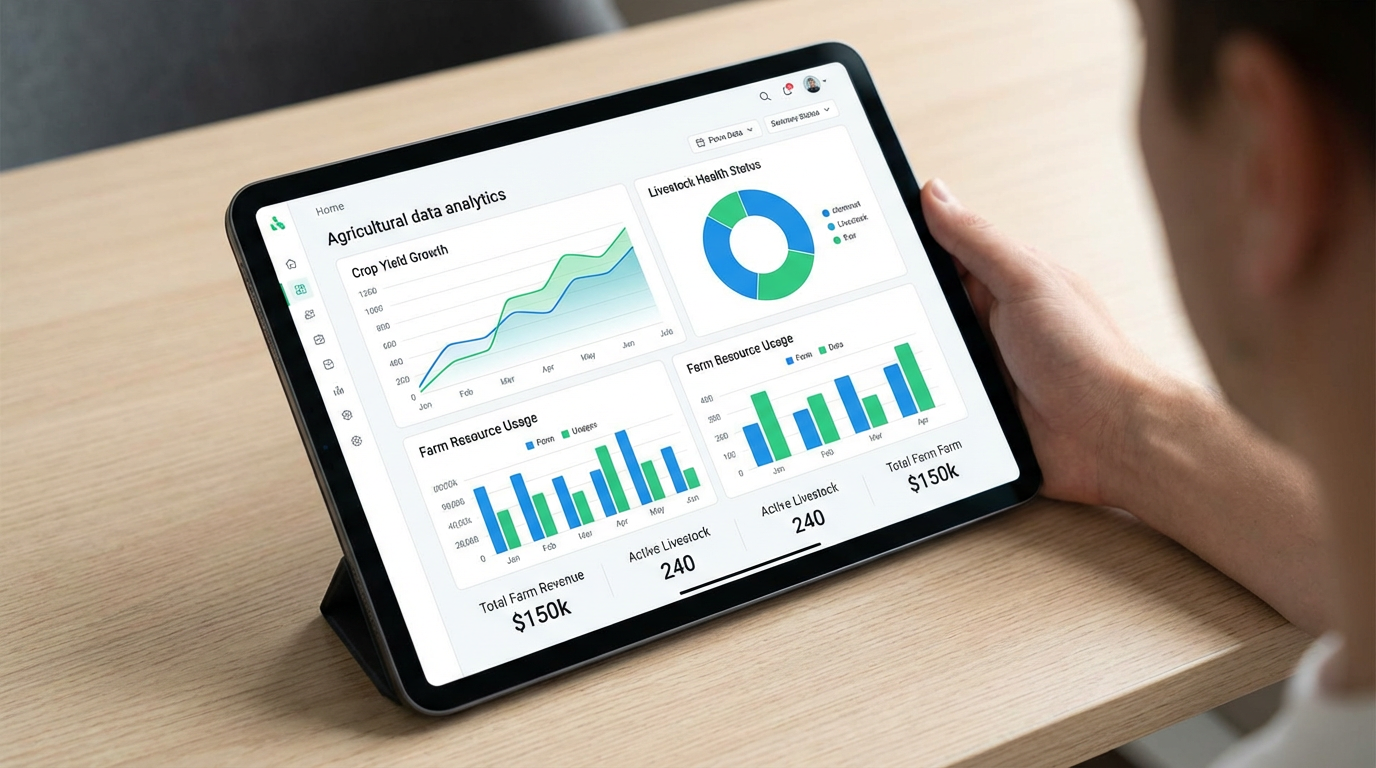
All the complex data processing is distilled into an intuitive, user-friendly dashboard. The Trackfarm dashboard provides managers with a holistic view of the entire operation, from the health status of an individual piglet to the FCR of the entire finishing herd. Key performance indicators (KPIs) are displayed in real-time, allowing for immediate strategic adjustments. This data transparency empowers farmers to make evidence-based decisions, moving away from guesswork and toward predictable, repeatable results.
Case Study: The Trackfarm Advantage in Action
Consider a hypothetical 10,000-head finishing operation struggling with chronic respiratory issues and inconsistent growth rates. Before Trackfarm, the farm experienced an average mortality rate of 4.5% and an FCR of 2.8:1. Labor costs were high due to the need for constant manual checks.
After implementing Trackfarm:
- Mortality Reduction: Within six months, the AI’s early detection capabilities reduced the mortality rate to 2.0%. The system identified respiratory issues days earlier, allowing for targeted treatment and isolation, preventing widespread infection.
- Efficiency Gains: Precision feeding, guided by the AI’s continuous FCR analysis, lowered the FCR to 2.5:1. This seemingly small change resulted in a massive reduction in annual feed consumption, saving the farm hundreds of thousands of dollars.
- Labor Reallocation: The AI took over 90% of the routine monitoring tasks. Farm staff were reallocated to higher-value activities, such as maintenance, training, and direct animal care for flagged individuals. The farm was able to increase its herd size by 10% without hiring additional staff.
The overall Return on Investment (ROI) was realized within the first year, demonstrating that AI is not a long-term luxury but a short-term necessity for competitive farming.
Beyond the Barn: Sustainability and Ethics
The application of AI in livestock management extends far beyond the bottom line; it is a powerful tool for promoting sustainability and improving animal welfare.
Environmental Footprint Reduction
By optimizing FCR, Trackfarm directly contributes to a reduced environmental footprint. Less feed consumed per unit of meat produced means less land, water, and energy are required to grow the feed crops. Furthermore, better feed utilization leads to less nitrogen and phosphorus excretion in manure, mitigating the environmental impact of waste runoff. AI-driven climate control also optimizes energy use for heating and ventilation, reducing the farm’s overall carbon emissions.
Enhanced Animal Welfare
The core of Trackfarm’s health monitoring is a commitment to animal welfare. The AI ensures that every animal is comfortable, well-fed, and free from distress. By detecting subtle signs of pain, illness, or stress, the system ensures that suffering is minimized and that intervention is swift. This proactive, individualized care is the highest standard of modern animal husbandry. The system’s ability to detect and mitigate aggression also reduces injuries and stress-related behaviors, leading to a calmer, healthier herd.
The Future of Livestock Management
Trackfarm is continuously evolving its AI models. The next frontier involves integrating genetic data with real-time behavioral data to create truly personalized management plans for every animal from the moment of birth. Imagine an AI that can predict a pig’s entire life trajectory—its optimal diet, its disease susceptibility, and its final market weight—based on its DNA and its daily activity.
The transition to intelligent farming is inevitable. As global populations grow and resources become scarcer, the agricultural industry must embrace technologies that allow for maximum output with minimal input. Trackfarm is leading this charge, providing the practical tools that turn the promise of AI into the reality of a more efficient, sustainable, and ethical food system. The hype is over; the practical application is here, and it is revolutionizing the way we feed the world.
The journey from traditional farming to precision livestock management is a significant one, but with robust, proven technology like Trackfarm, the path is clear. Farmers are no longer just caretakers; they are data scientists, leveraging the power of AI to achieve unprecedented levels of productivity and animal well-being. The future of the farm is intelligent, and it is powered by Trackfarm.